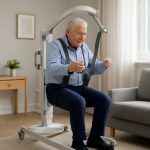
Mobility challenges affect millions of individuals recovering from surgery, living with chronic conditions, or managing age-related decline. For those who can bear partial weight but lack the strength to stand independently, the power sit to stand lift has emerged as a game-changing solution. Unlike traditional manual lifts or ceiling-mounted systems, these powered devices combine motorized assistance with ergonomic design to create a smooth, controlled transition from sitting to standing. This article explores the technical features, clinical benefits, and real-world applications of this essential equipment, offering insights for caregivers, therapists, and healthcare administrators seeking to optimize patient outcomes while reducing physical strain on staff.
Understanding the Mechanics and Advantages of Power Sit to Stand Lifts
A power sit to stand lift operates on a simple yet effective principle: it uses an electric actuator or hydraulic system to tilt the patient forward while lifting them upward, guiding their body into a standing position with minimal effort. The patient typically wears a supportive sling or harness around the torso, and the lift’s padded knee pad stabilizes the lower body during the motion. Unlike full-body lifts that require the patient to be completely passive, this device requires the user to bear some weight on their legs, actively engaging their muscles and promoting circulation. This partial weight-bearing aspect is crucial for rehabilitation, as it helps maintain bone density, joint mobility, and muscle tone.
The mechanical advantage of a powered system over a manual model cannot be overstated. Manual sit-to-stand lifts rely on a hand crank or hydraulic pump, which demands significant physical effort from the caregiver—especially when assisting heavier patients. In contrast, a power sit to stand lift executes the entire transfer with the push of a button, eliminating the risk of caregiver back injuries and repetitive strain. Modern units feature variable speed controls, allowing the operator to adjust the lifting pace to the patient’s comfort level. Many models also include emergency stop buttons and battery backup systems, ensuring safety even during power outages.
Another key advantage is the compact footprint of these lifts. They easily maneuver through standard doorways and fit into tight spaces around hospital beds, wheelchairs, and toilet areas. The base legs are designed to slide under most chairs and beds, reducing the need to reposition furniture. Additionally, powered models often come with digital weight sensors that display the patient’s weight, aiding in accurate documentation for bariatric care or physical therapy progress tracking. By combining engineering precision with user-friendly controls, the power sit to stand lift bridges the gap between independence and safety, making it a staple in hospitals, nursing homes, and home care settings alike.
The ergonomic design also addresses a common challenge: patient anxiety during transfers. The smooth, continuous motion of a powered lift reduces the jerking or sudden stops associated with manual devices, helping patients feel more secure and cooperative. This psychological comfort is especially important for individuals with dementia or fear of falling. With proper training, caregivers can complete a transfer in under a minute, dramatically improving efficiency during busy shifts. For those considering equipment upgrades, exploring a reliable power sit to stand lift can provide the durability and support needed for both acute and long-term care environments.
Clinical Applications and the Reduction of Caregiver Strain
The therapeutic value of the power sit to stand lift extends far beyond basic transfer assistance. In rehabilitation settings, physical therapists use these devices to progressively increase weight-bearing loads, helping patients rebuild strength after hip replacements, stroke events, or spinal injuries. The lift allows the therapist to control the exact percentage of body weight the patient supports, starting at 30% and gradually increasing as tolerance improves. This controlled environment minimizes the risk of falls and overexertion, which are common when attempting manual stand-pivot transfers. Studies have shown that patients using powered sit-to-stand lifts during early recovery achieve faster functional independence scores compared to those relying on manual assistance alone.

For long-term care residents with conditions such as Parkinson’s disease, multiple sclerosis, or muscular dystrophy, the power sit to stand lift provides a daily tool for maintaining dignity. Instead of relying on two or three staff members for a single transfer, a single caregiver can safely assist even a heavier resident. This autonomy not only preserves the patient’s sense of agency but also significantly reduces the incidence of caregiver musculoskeletal injuries. According to occupational health data, nursing aides who perform more than ten manual standing transfers per day have a 70% higher risk of lower back pain. Replacing those manual tasks with a powered device cuts that risk dramatically, lowering workers’ compensation claims and improving staff retention.
Specialized applications include bariatric care, where patient weight often exceeds 300 pounds. Heavy-duty power sit to stand lifts with reinforced frames and higher weight capacities (up to 600 pounds in some models) enable safe transfers without compromising caregiver safety. The powered mechanism also reduces the need for multiple caregivers to coordinate a lift, which can be chaotic and dangerous. In home care settings, families often struggle with transferring a loved one from a wheelchair to the toilet or bed. A power sit to stand lift can be rented or purchased for short-term recovery periods, allowing family caregivers to provide care without risking their own health. The compact storage of these lifts—many fold down to fit in a closet—makes them practical for residential use.
Training protocols for caregivers emphasize the importance of proper sling application and knee pad positioning. Even with a powered device, incorrect placement can lead to skin shear or discomfort. Modern lifts come with color-coded slings and quick-release buckles that simplify the process. Facilities that invest in a power sit to stand lift often report a 30% reduction in transfer-related incidents within the first three months. One case study from a mid-sized rehabilitation center noted that after transitioning from manual to powered lifts, their average patient transfer time dropped from 12 minutes to 5 minutes, freeing up staff for more direct therapeutic interventions.
Real-World Case Studies: How Power Sit to Stand Lifts Change Outcomes
To illustrate the tangible impact, consider the case of Oakwood Rehabilitation Hospital in suburban Ohio. Prior to 2022, the facility used manual sit-to-stand lifts for its 50-bed orthopedic unit. Despite regular training, staff complaints of back strain were common, and patient fall rates during transfers hovered around 2.5 per month. The director of nursing decided to pilot five power sit to stand lifts in the unit, replacing the oldest manual models. Within six weeks, transfer-related falls dropped to zero, and caregiver injury reports decreased by 80%. Physical therapists reported that patients were more willing to participate in stand-pivot exercises because the powered motion felt less intimidating. One 82-year-old hip replacement patient, initially refusing to stand due to fear, achieved independent standing after only four sessions with the powered lift. Oakwood has since converted its entire facility to powered models and documented a 25% decrease in average length of stay for post-surgical patients.
Another example comes from HomeCare Solutions, a private agency in Florida that provides in-home assistance for elderly clients. They faced a challenge with an 88-year-old client with advanced osteoarthritis: his daughter, the primary caregiver, had suffered a herniated disc from previous manual transfers. The agency loaned a power sit to stand lift and trained the daughter on its use. Over three months, the client’s mobility progressed from requiring two-person assistance to being able to rise with minimal help from the lift. The daughter reported no further back pain and described the device as “life-saving” for her mother’s morale. The lift’s battery-powered portability allowed them to use it in the living room, bedroom, and bathroom without cumbersome power cords. This case underscores how powered equipment can enable aging in place while preserving caregiver health.
In a bariatric specialty clinic in Texas, a 450-pound patient with diabetic neuropathy needed daily transfers from bed to wheelchair. The clinic’s traditional manual lift required three staff members and left the patient feeling anxious and helpless. After acquiring a heavy-duty power sit to stand lift with a 600-pound capacity, a single nurse could perform the transfer smoothly. The patient’s psychological response was notable: he began participating in his own care, gripping the lift handles and pushing with his legs. Within two months, he was able to stand for 30-second intervals without the lift’s full support. The integrated scale on the lift also helped track his weight loss progress, further motivating him. These real-world examples demonstrate that the power sit to stand lift is not merely a convenience—it is a therapeutic tool that promotes active recovery, reduces healthcare costs, and enhances quality of life for both patients and caregivers.